Max Fürst Youth Award Ceremony

Max Fürst Youth Award

June | 2026

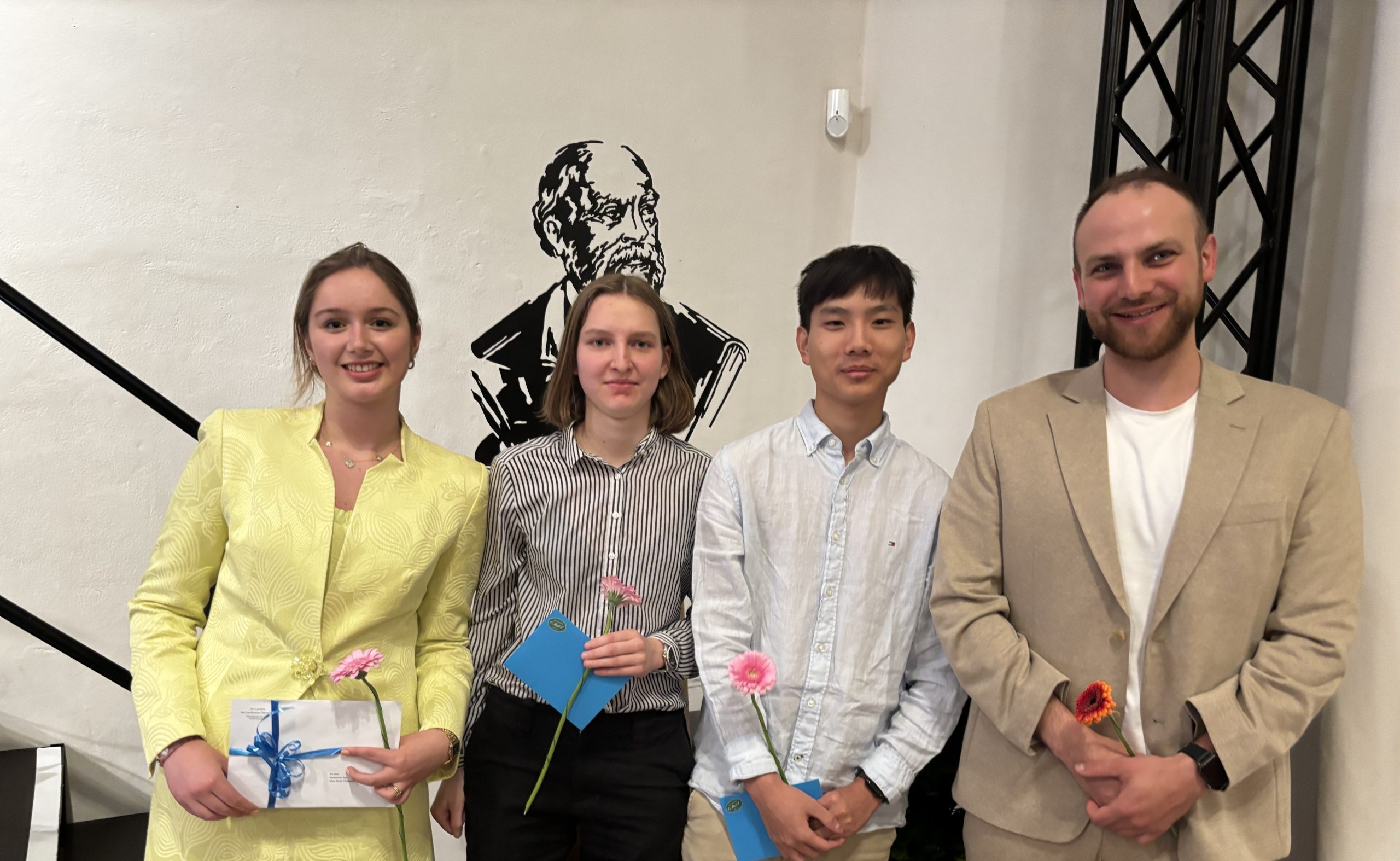
Three students from the Schule Schloss Stein—Anna Kranzbühler García, Liv Erdmann, and Ruizhe Tom Zhang—were nominated for the Max Fürst Youth Prize.

We are particularly pleased with Anna’s success; her historical research project impressed the jury and earned her the Max Fürst Youth Prize.

Congratulations to Anna, as well as to Liv and Tom, for their outstanding achievements. Special thanks also go to Mr. Kollmeier, who supervised the projects as part of the history W-seminar.

Below is a follow-up report by Liv Erdmann, a letter of congratulations from Karl Freller, Member of the State Parliament, former State Secretary for Culture, and Director of the Bavarian Memorial Sites Foundation, as well as the laudatory speech given by Ms. Perchermaier of the Historical Society for the Chiemgau Region in Traunstein in honor of Liv and Tom:

image (65)

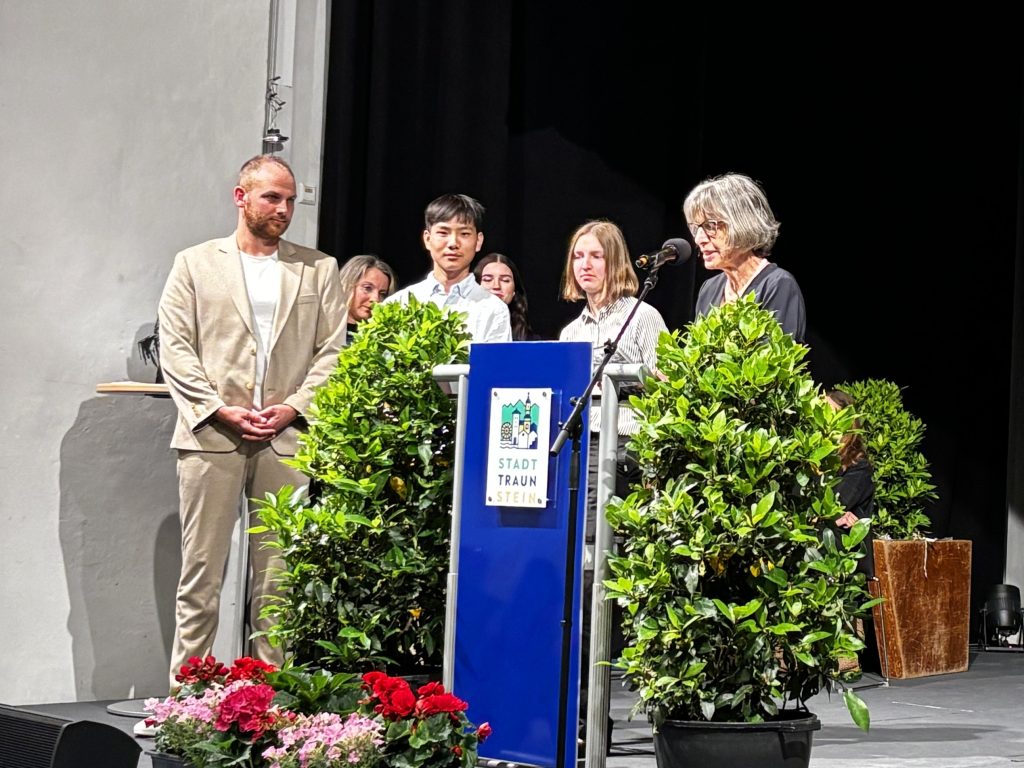
On June 16, 2026, we were invited to Traunstein for the presentation of the Max Fürst Prize and the Max Fürst Youth Prize. These prizes have been organized for the past 25 years by the Historical Society for the Chiemgau in Traunstein. The Max Fürst Prize, which was awarded this year to Dr. Alfred Kotter, honors a person each year who is committed to local history research and engaged in historical reappraisal. At the same time, historical projects and local initiatives by young people are nominated and presented at this event for the Max Fürst Youth Prize, and one of the entries is honored with the award. This year, in addition to a project on Ludwigstraße in Traunstein and a seminar paper on the Obersalzberg, three students from our school were nominated for this youth prize—Anna, Tom, and Liv from Mr. Kollmeier’s advanced history seminar on the culture of remembrance as illustrated by local examples. Their projects exemplified the machinations of the Nazi dictatorship, particularly through the individual fates of local political figures and concentration camp prisoners; in Anna’s specific case, she focused on a Spanish prisoner who was held at the Trostberg satellite camp. The projects involved research via email, requests to archives, on-site visits to historical sites and archives, the analysis of sources, and the identification, conducting, and evaluation of relevant interviews. This effort was recognized. After a brief presentation of all the projects and works, Anna was honored with the Max Fürst Youth Prize. Following the event, we rounded out the evening with a dinner together in Traunstein.

Liv Erdmann, high school senior, class of 2026

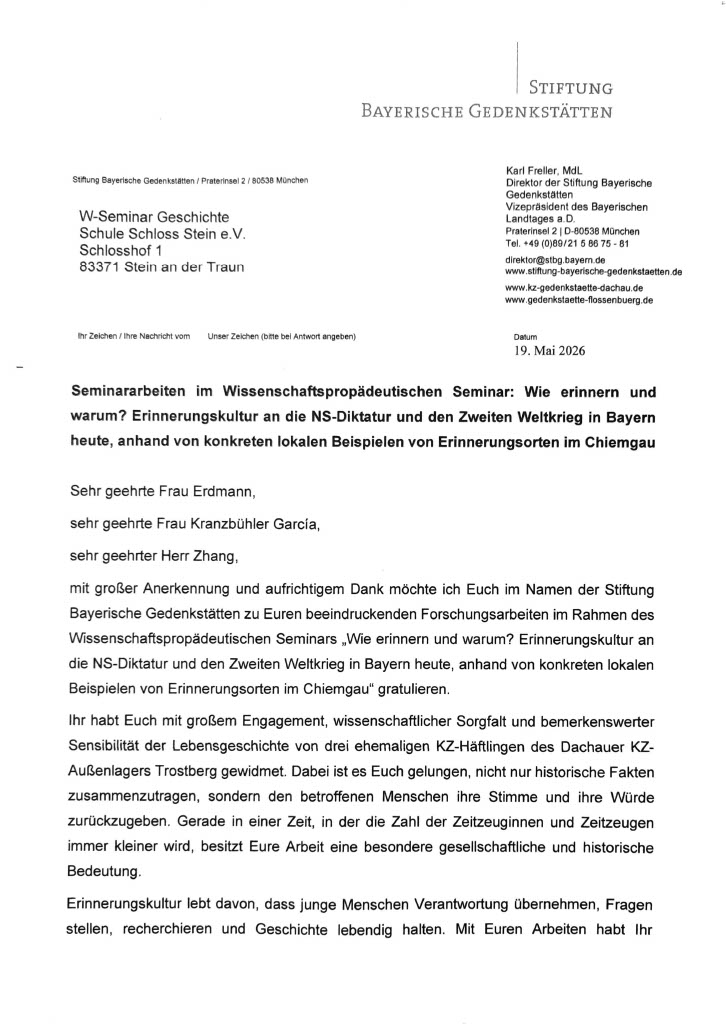
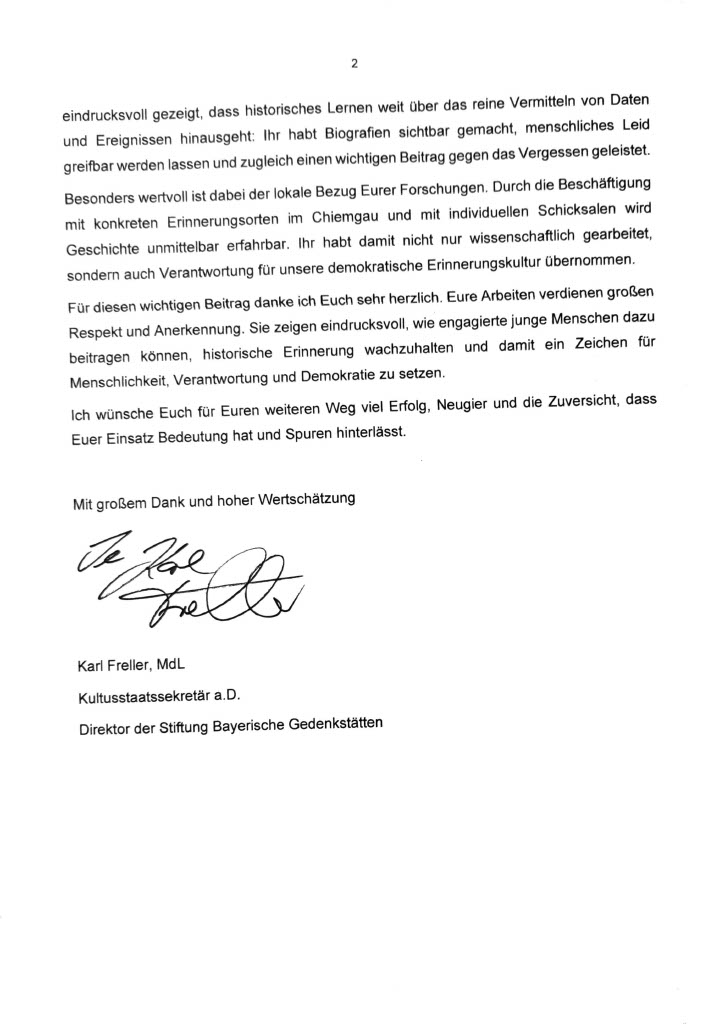
Below is the congratulatory letter from Karl Freller, Member of the State Parliament, former State Secretary for Culture, and Director of the Bavarian Memorials Foundation:

Letter of Congratulations from the Bavarian Memorials Foundation

Ms. Friedrich’s laudatory speech about Anna:

“Let’s now move on to the highlight of the evening so far:
Anna Kranzbühler García, a student at Schule Schloss Stein, wrote a paper for Mr. Kollmeier’s seminar ‘How Do We Remember and Why? The Culture of Remembrance of the Nazi Dictatorship and World War II…’ titled “Spanish Prisoners at the Trostberg Concentration Camp Satellite Camp: The Case of Emeterio López López,” in which she examined the fate of the Spanish prisoner of war and drew on previously unpublished sources. Spanish prisoners of war in Trostberg—this information may come as a surprise to some of you here in the audience. The seminar paper first traces the path that many Spanish citizens who fought on the side of the Republic were forced to take after the Franco dictatorship’s victory in 1939, if they were able to escape arrest in Spain: initially believing themselves to be in relative safety in exile in France, they were unwelcome there as “Reds” and due to their large numbers; as a result, in many cases they ended up in German captivity—and thus in Germany—as supporters of the French Resistance and opponents of Vichy and Nazi Germany; This was also the fate of López López, who, beginning in November 1944, was forced into war-related forced labor at the Trostberg concentration camp satellite camp;
Emeterio survived the harassment and hardships and returned to France after the war, where he lived with his family until his death in 1989.
Anna Kranzbühler García analyzes the notes left by Sylvia, the daughter; she succeeds in establishing contact and conducting an interview with Raphaël, the son, and Simon López, the grandson. Through this contact, the author gains access to original sources that had previously been untapped, at least in a local context. She analyzes original documents, photographs, two written accounts, and sketches from the López family’s collection and includes reprints of them in her work. This genuinely scholarly work deserves special recognition: it represents true historical research, in which original sources are contextualized for the public and preserved for posterity.
The podcast to be produced as a follow-up, featuring an interview with the
historian Johannes Meerwald and the original voices of the descendants, is certainly a wise way to keep
memories of a time alive for future generations as well—a time that will soon have lost its last witnesses.
The 2026 Max Fürst Youth Prize is hereby awarded to Anna Kranzbühler García
from the Gymnasium Schule Schloss Stein. Congratulations!”

Katharina Friedrich | Laudator

Ms. Perchermaier’s laudatory speech about Liv and Tom:

“Honoring the 2026 Max Fürst Youth Prize Nominee
At the Schule Schloss Stein, Mr. Korbinian Kollmeier led a W-seminar
(Introductory Seminar in the Sciences) on the interesting and timely topic “How Do We Remember and Why? The Culture of Remembrance of the Nazi Dictatorship and World War II in Bavaria Today.” In this context, his
students examined specific local examples from the Chiemgau region. We
owe him three nominations for our award. I would now like to introduce two of them to you:
Ruizhe Zhang examined the fate of Josef Kiene, an SPD politician from Trostberg
. This name may be familiar to some of you—as
a distinguished city council member of Trostberg, as a district administrator, and as a long-serving
member of the state parliament. Few people know that he vigorously resisted the rise of National Socialism
: for example, he appeared at
Nazi campaign rallies, wielding his rhetorical talent and
even greater courage. One must imagine just how heated the
atmosphere was at the time. He paid for this commitment with repeated arrests and a 140-day stay at the Dachau concentration camp.
The author traces this ordeal in detail using numerous primary sources
. He proposes creating a website about Josef Kiene to bring this facet of his biography to the public’s attention.
Liv Erdmann also conducted a study on the seminar topic assigned by Mr.
Kollmeier. She profiles Alois Magg from Trostberg, who was also a member of the SPD and active in the labor union and the Reichsbanner. He suffered a fate typical of political dissidents: arrested twice, mistreated during interrogations, and spent four years in the Dachau concentration camp, at times under harsh conditions such as isolation and reduced food rations.
Alois Magg’s story illustrates how a person could be crushed on two front
: After 1945, he had to answer for crimes he had committed as a “Kapo”—a sort of overseer of other prisoners—including, for example, allegedly beating fellow prisoners. He was convicted but pardoned by the Prime Minister after six months.
The two works just described are particularly impressive due to the
large number of primary sources cited—over 40 in each case! Here, of course,
great credit is due to Mr. Kollmeier, who introduced his students to
archival research at the Trostberg City Archives, the SPD Archives
in Trostberg, the Munich State Archives, and the Archives of the State Office of Finance,
—in some cases even through personal visits.
We congratulate all the students and their supervising teachers on their projects,
which represent an important contribution to local history. In recognition of your
participation in our competition, each of you will receive a book voucher.”

Gudrun Perchermaier | Historical Society for the Chiemgau Region in Traunstein