July | Jacqueline Nazet, Teacher
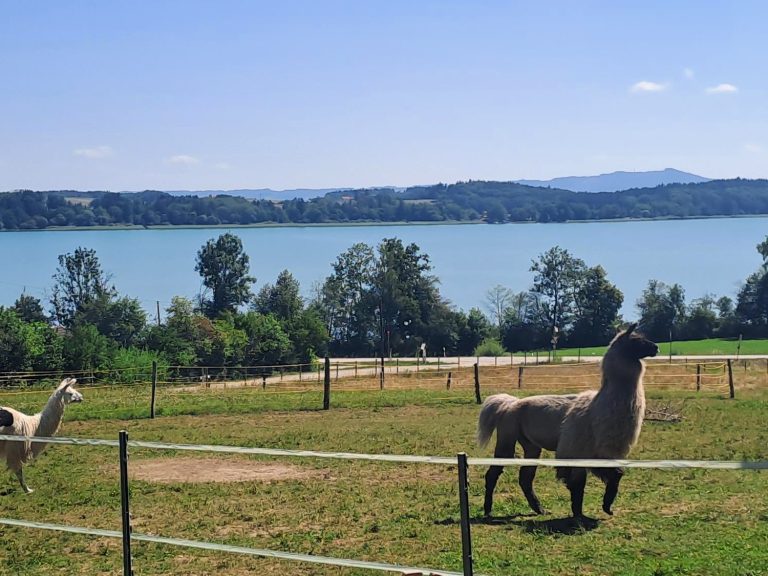
On Tuesday, July 28, 2026, the 5th- and 6th-grade students went on an exciting field trip to a llama hike at Lake Waging. As soon as they arrived, everyone was curious about the friendly animals and looking forward to this special outing.
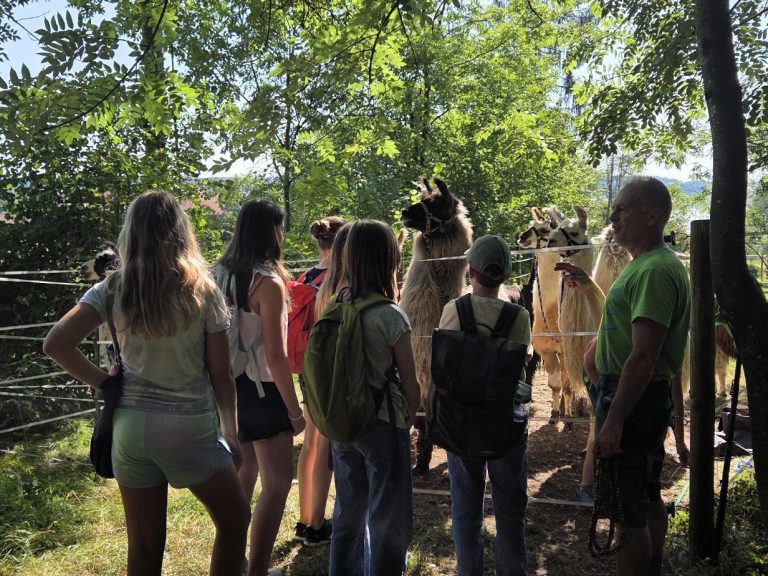
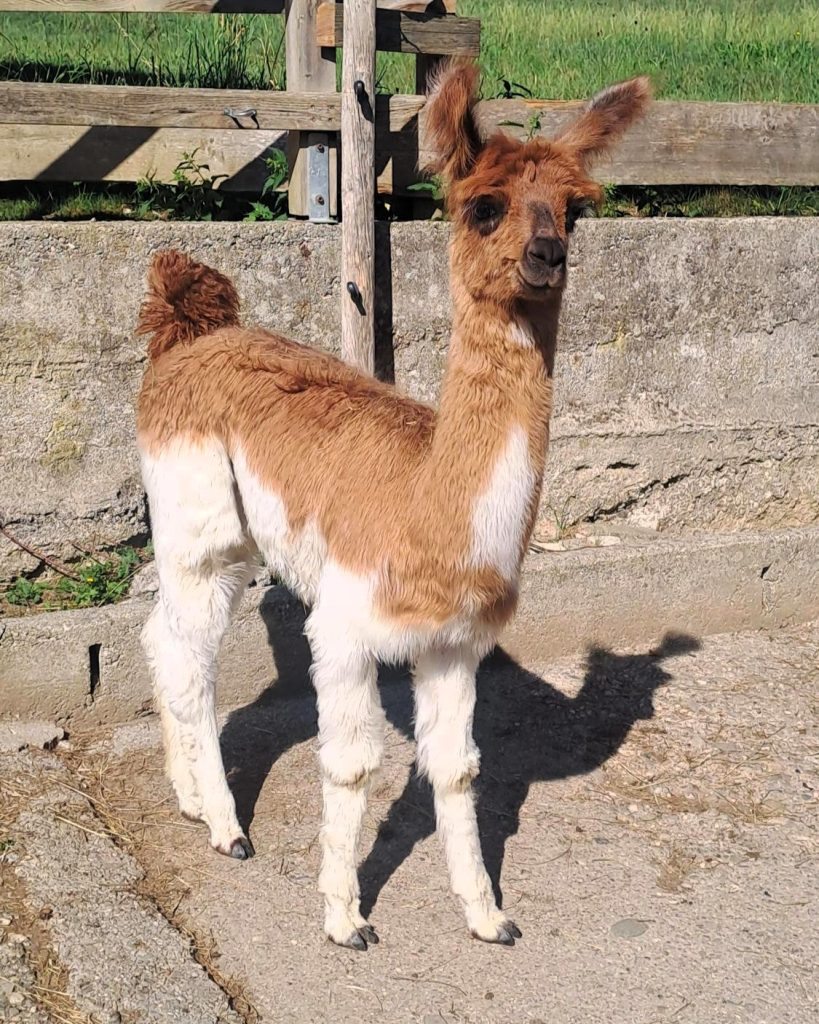
First, we got to know the farm and its inhabitants. There, we were able to observe many llamas. The female and male animals are kept separately. The students were especially excited about the cute llama foals among the females. The little animals were very cute and were admired at length.
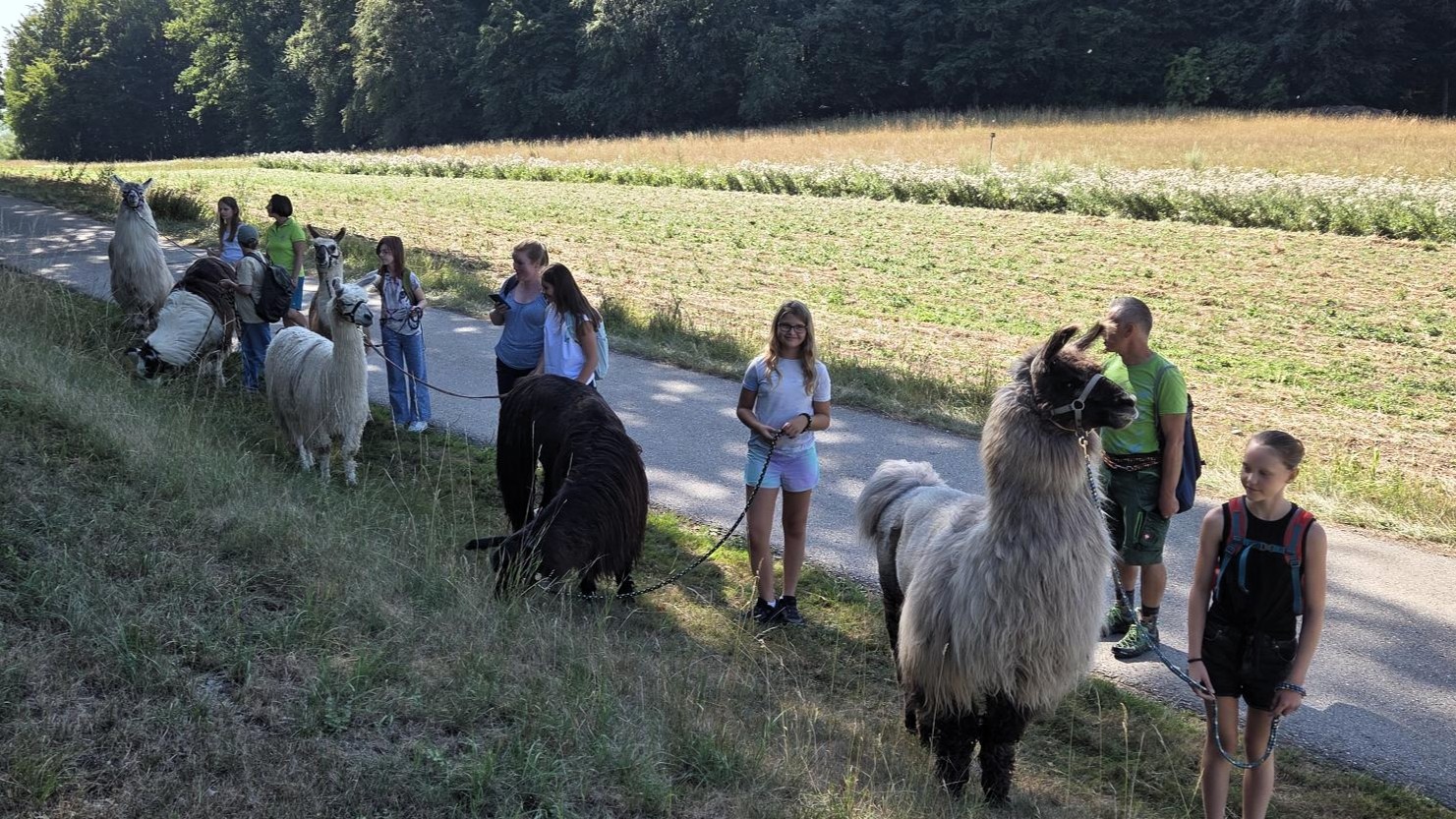
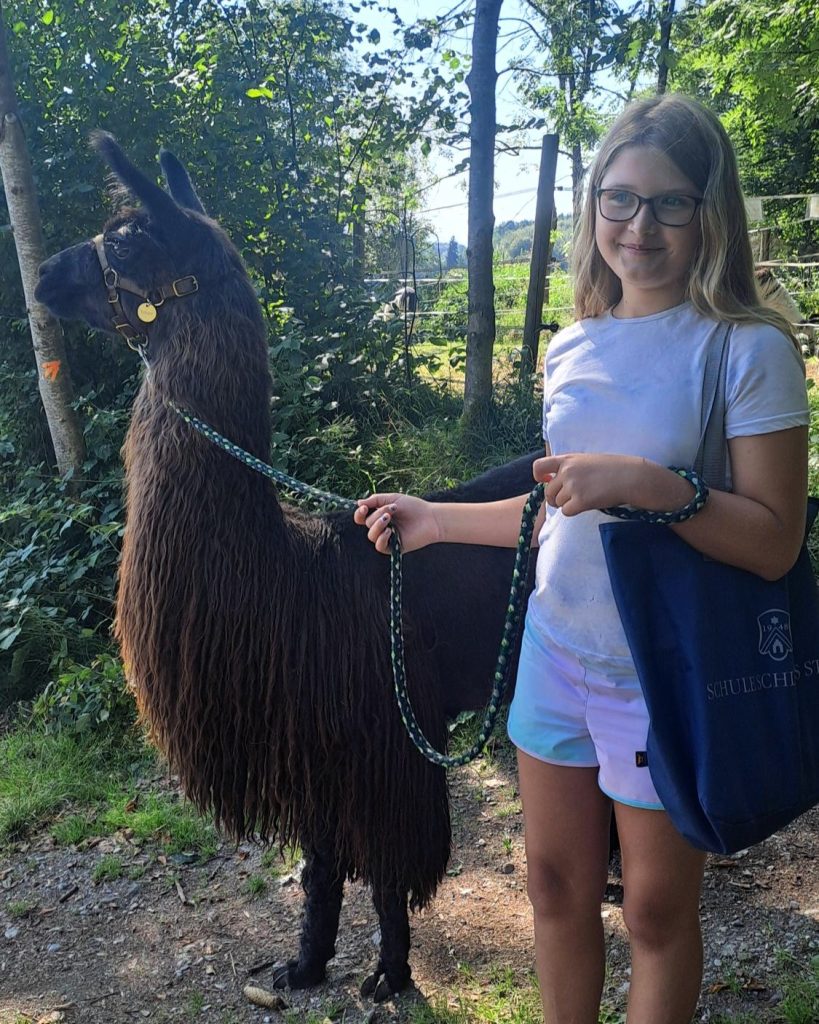
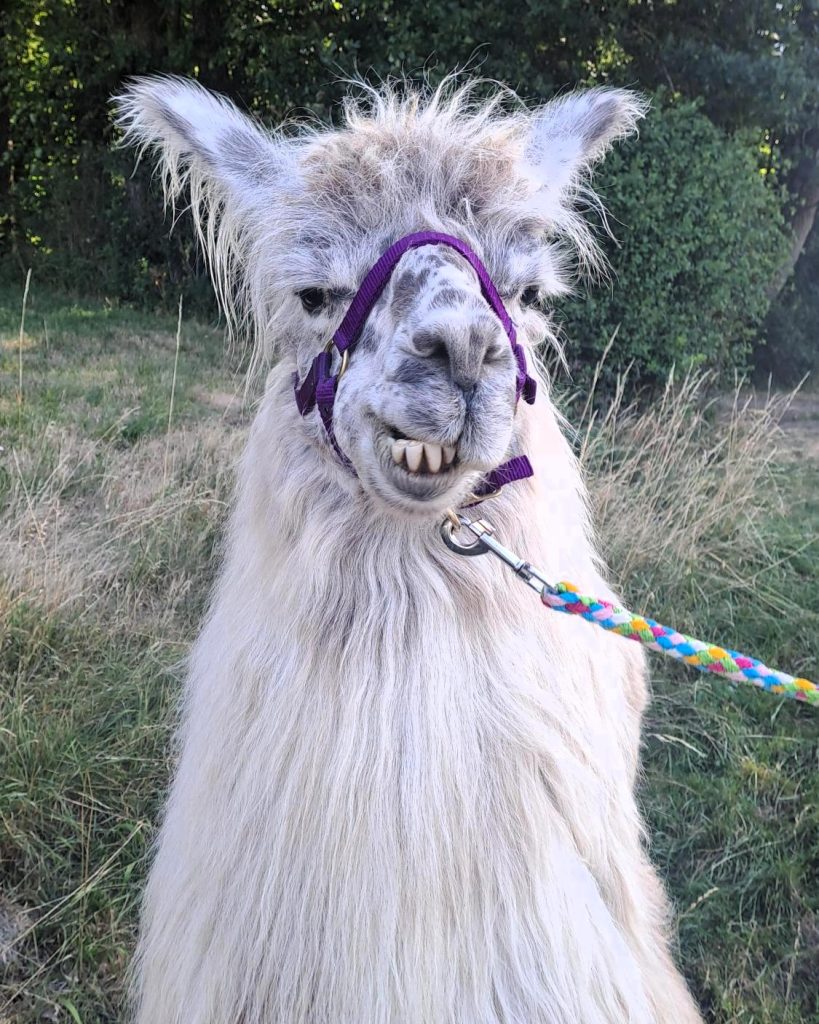
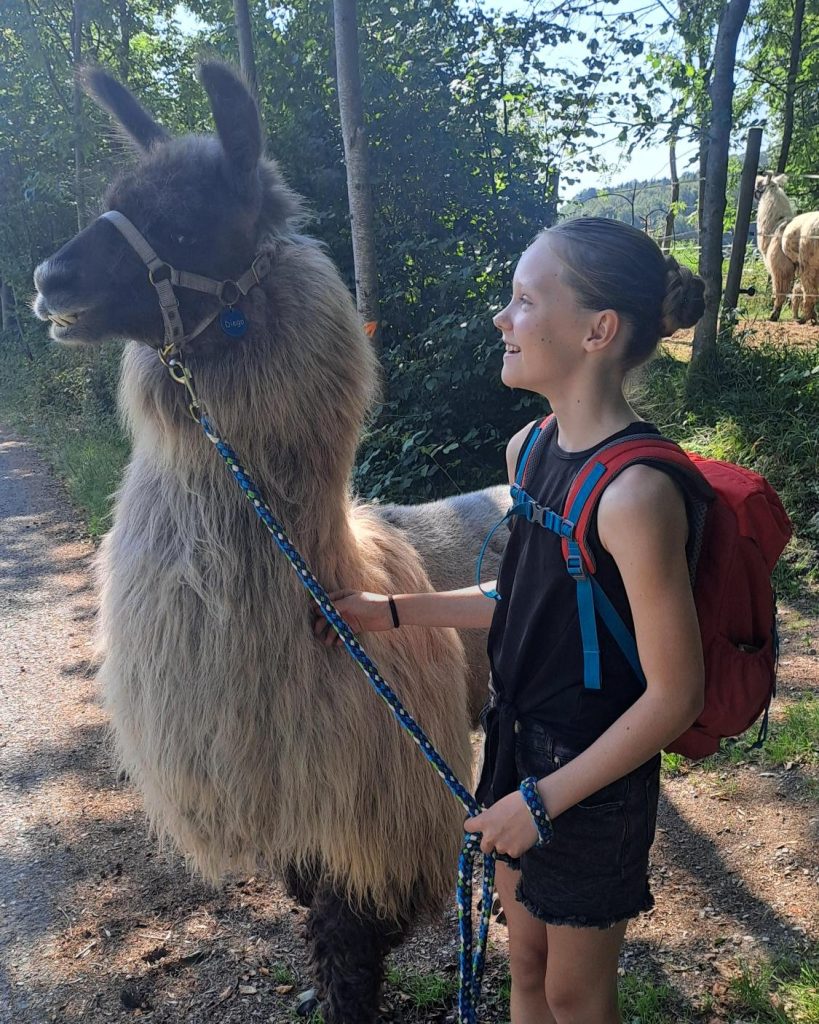
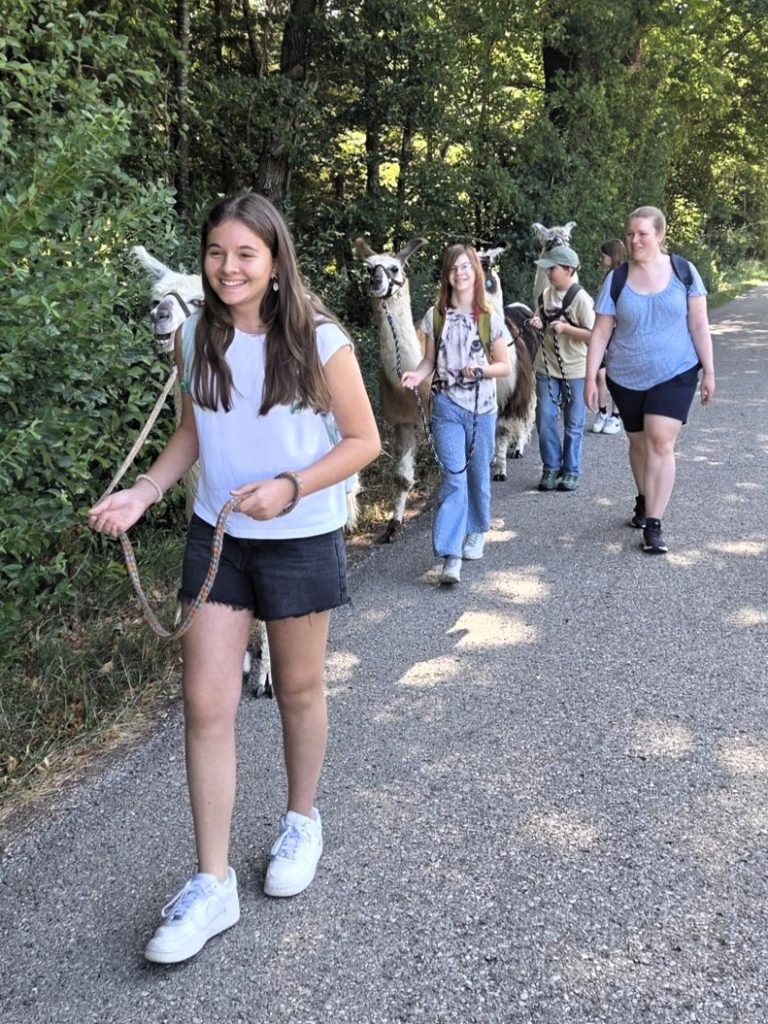
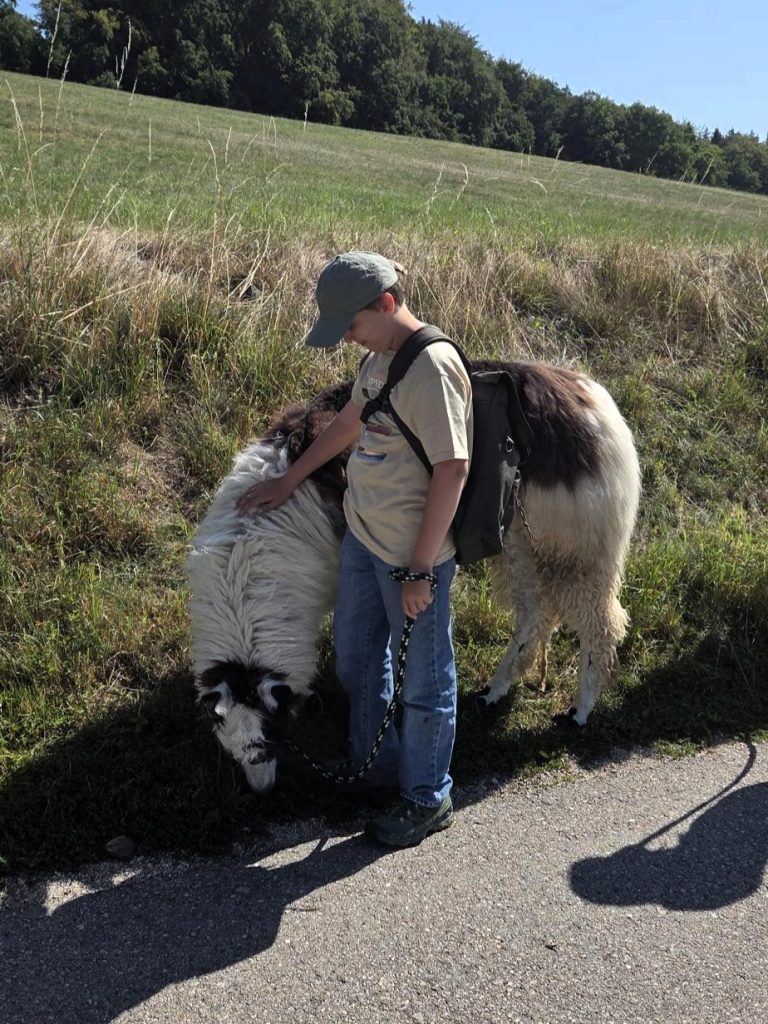
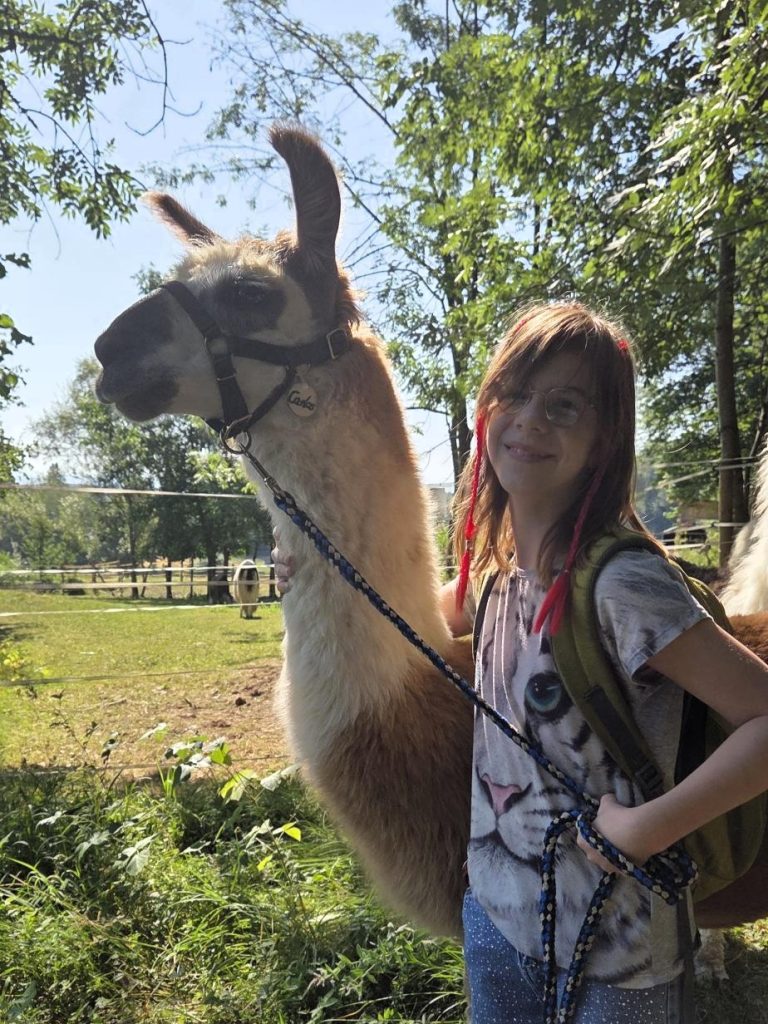
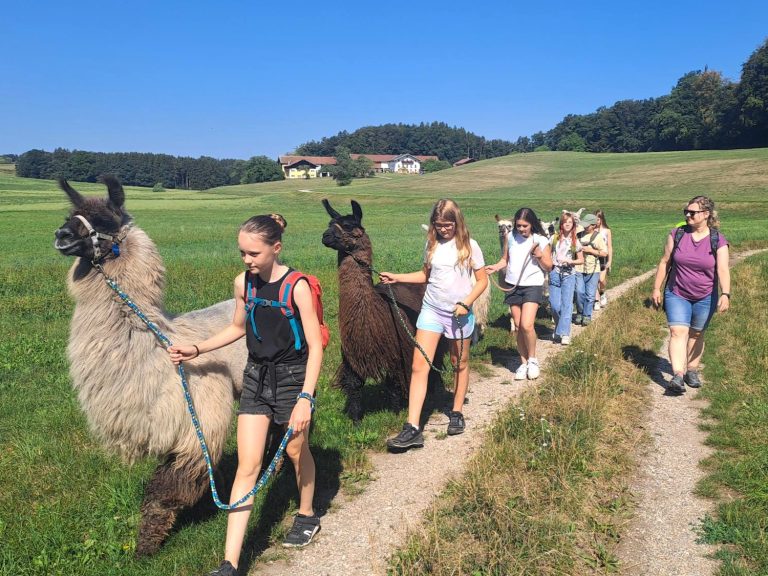
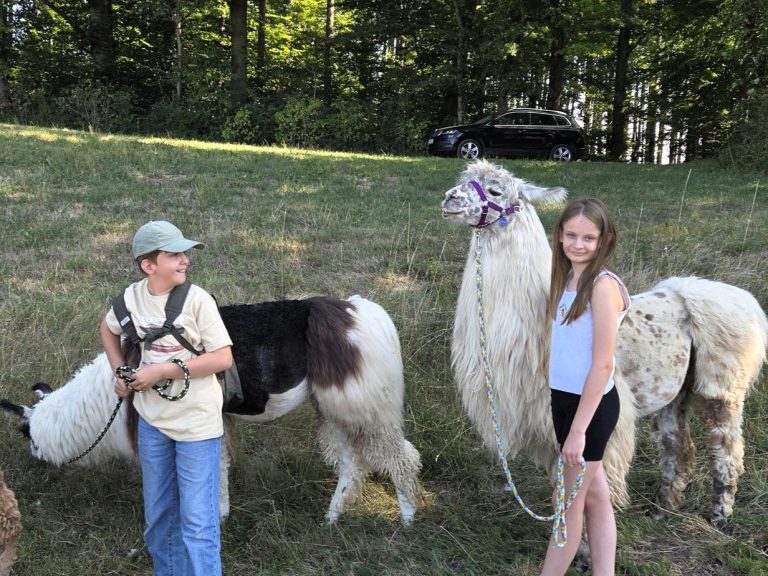
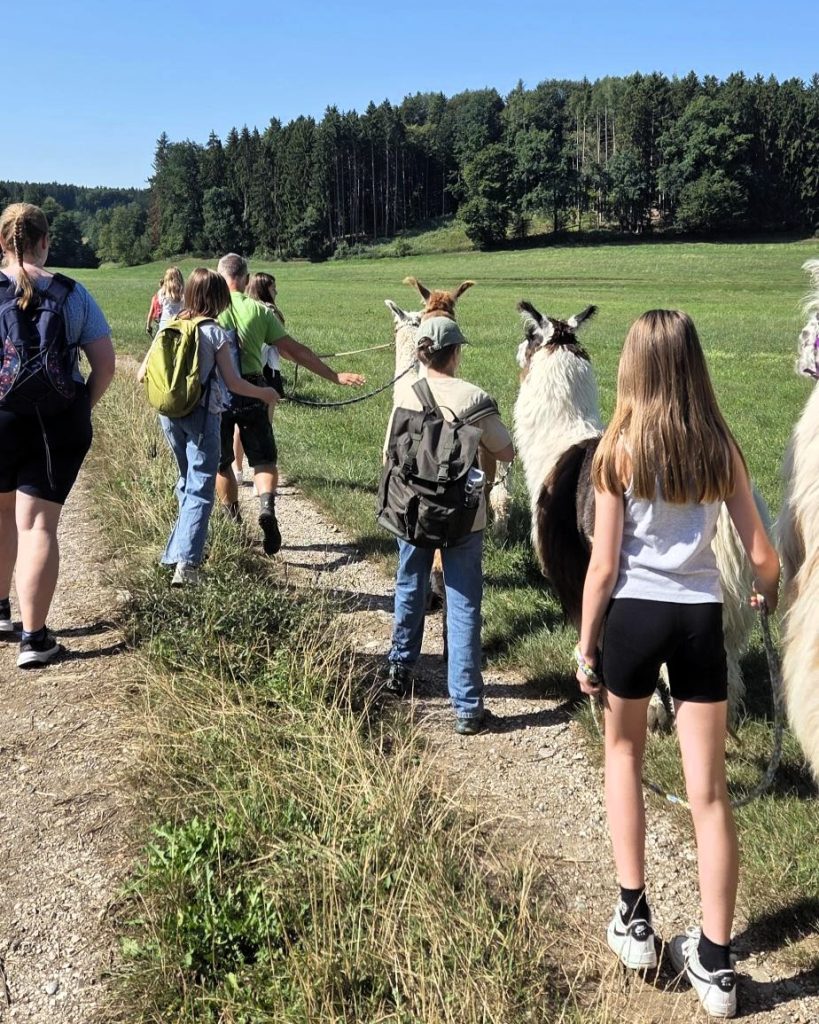
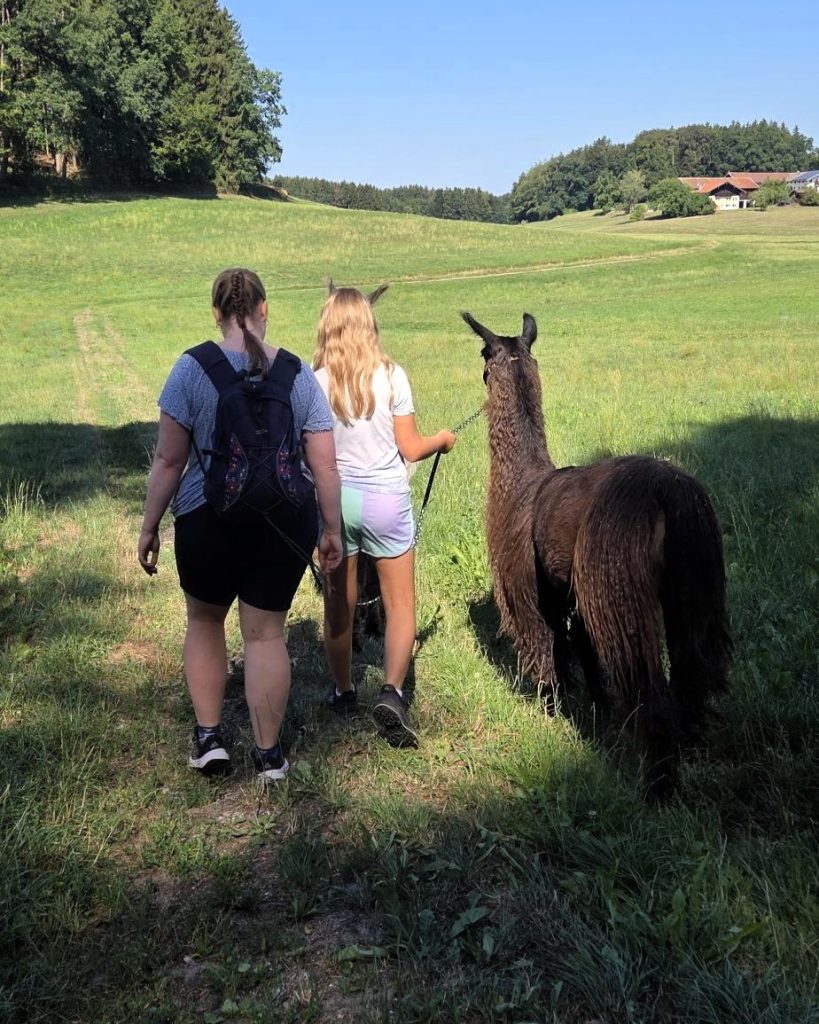
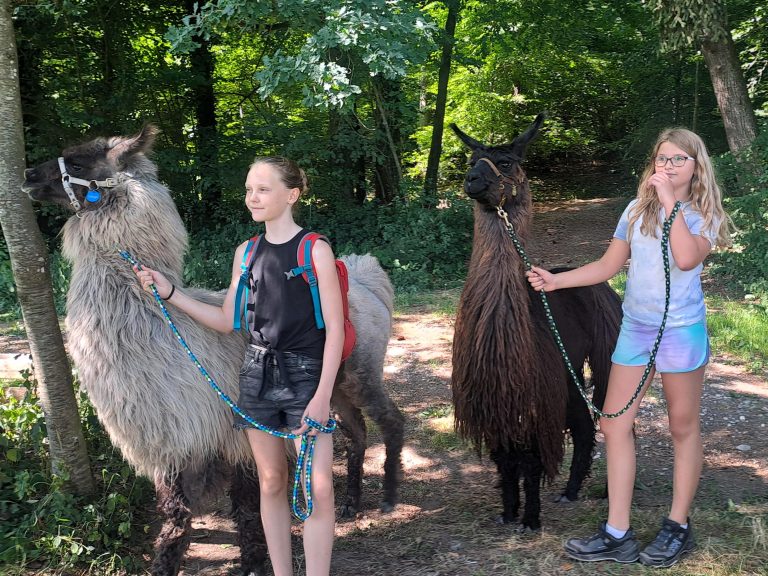
Afterward, each student was given a llama on a leash. Then we set off on a short hike. The llamas were supposed to walk obediently in single file. However, the animals had a mind of their own: some kept up at a brisk pace, while others took it much more leisurely. As a result, our llama caravan kept coming to a halt. Some llamas took advantage of the short breaks to sneak a bite of grass or leaves. The students had a lot of fun trying to stop the animals and keep the group in order. It quickly became clear that each llama had its own personality. All the animals were very friendly and lovable.
Matilda also had a special experience. At first, she was a little afraid of the large animals. But after just a short time, she got used to her llama and grew more and more confident. By the end of the hike, her hesitation had disappeared, and she really enjoyed spending time with the animals.
Anton noticed that his llama was communicating with him very clearly through body language. Through its posture, movements, and reactions, the animal seemed to be constantly “talking” to him. So Anton quickly learned to better understand his llama’s signals.
During the hike, the owner told us a lot of interesting facts about llamas. We learned, for example, that llamas are ruminants. They regurgitate food they’ve already eaten and chew it again. That’s why you often see llamas chewing, even when they aren’t actually eating anything.
We also learned about how the animals interact with one another. When llamas establish their hierarchy, they spit at each other. In doing so, they force up stomach contents and spray them at their opponent. It smells very unpleasant. People are not usually spat on, since they do not belong to the animals’ herd. In rare cases, however, due to improper socialization—for example, if a llama was separated from its mother too early—people may also be spat on.
It was quite an experience that we didn’t actually see a single spitting llama. There was only one brief moment of tension: one llama got a little too close to another. As a warning, it blew a puff of air at its neighbor. The owner explained to us that this puffing can be an early warning sign that a llama is about to spit. Since the message was understood, it remained just a friendly reminder, and the two animals quickly made up again. So, throughout the day, we found the llamas to be very peaceful companions.
After the walk, the children stopped by the farm’s gift shop, where they were able to buy small souvenirs. To wrap things up, each student was also given a cookie.
The llama hike was a wonderful experience for everyone. The children had a lot of fun, learned a lot about the animals, and got to spend a varied day out in nature. The students will surely remember this field trip for a long time to come.
To provide the best experiences, we and our partners use technologies like cookies to store and/or access device information. Consenting to these technologies will allow us and our partners to process personal data such as browsing behavior or unique IDs on this site and show (non-) personalized ads. Not consenting or withdrawing consent, may adversely affect certain features and functions.
Click below to consent to the above or make granular choices. Your choices will be applied to this site only. You can change your settings at any time, including withdrawing your consent, by using the toggles on the Cookie Policy, or by clicking on the manage consent button at the bottom of the screen.