The World's Oceans—The Basis of Life and the Scene of Global Crises

The W Seminar in Geography

July | 2026

The W-Seminar is a central component of upper secondary school in Bavaria. Over the course of one and a half years, students engage intensively with a scientific topic, learn scientific research methods, and write a comprehensive seminar paper. The goal is to promote independent research and specifically prepare students for the demands of college.

At Schule Schloss Stein, too, remarkable projects are regularly produced as part of the W-seminars. A notable example is the recently completed W-seminar in geography led by Daniel Glotz.

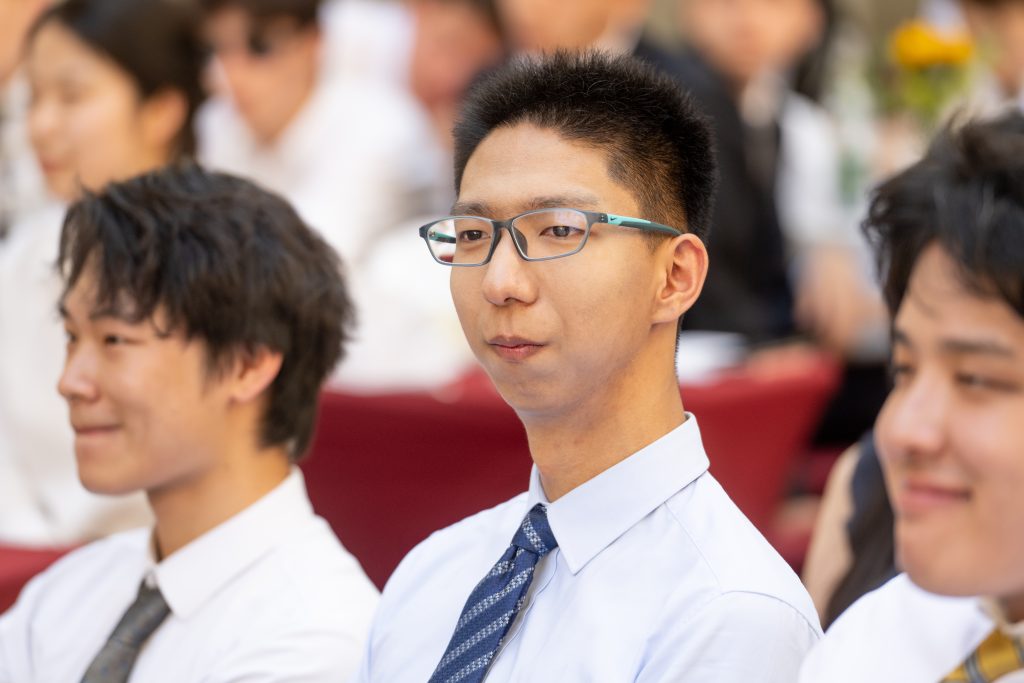
One outstanding work is by Jien He, who is originally from China and moved to Germany just a few years ago. Despite the added challenge of navigating a new language and an unfamiliar educational system, he graduated from Schule Schloss Stein with his Abitur at the age of just 16, achieving very good grades. In his seminar paper on the topic “The World’s Oceans—The Basis of Life and the Stage for Global Crises,” with a focus on “Global Shipping—Emissions, Invasive Species, and Other Risks,” he examines the importance of the oceans for the economy, the environment, and society, while also shedding light on the consequences of one of the most important transportation systems in our globalized world.

“Jien He’s seminar paper addresses, among other things, the issue of carbon dioxide, sulfur oxides, nitrogen oxides, and particulate matter emissions—which are of great importance to humans—and their impact on climate change, which is accelerating in our time and, of course, cannot be stopped.”

Daniel Glotz | Geography Teacher & Seminar Leader

Abitur at Schloss Stein 2026 56

In an interview with Jien He

In which subject did you write your W-seminar paper, and why?

“Ichose geography as the main subject for my W-seminar and, together with Mr. Glotz . The overarching topic is the world’s oceans, and I chose it because I find it very relevant to everyday life. In my opinion, the world’s oceans will continue to play an important role in the future.”

Why did you choose this particular topic?

“Mytopic is: Global shipping—emissions, biological invasions, and other risks. Lately, I’ve been reading a lot of news online about environmental pollution—especially marine pollution—and I’m really interested in whether the problem has already become that dire and urgent. I used to go to the beach a lot when I was a kid. As I’ve gotten older, I’ve also really enjoyed sailing. For me, shipping is simply an important part of the oceans. That’s why I want to investigate what effects shipping has on the oceans and how it can be made more environmentally friendly.”

What was the most interesting insight you gained during your research?

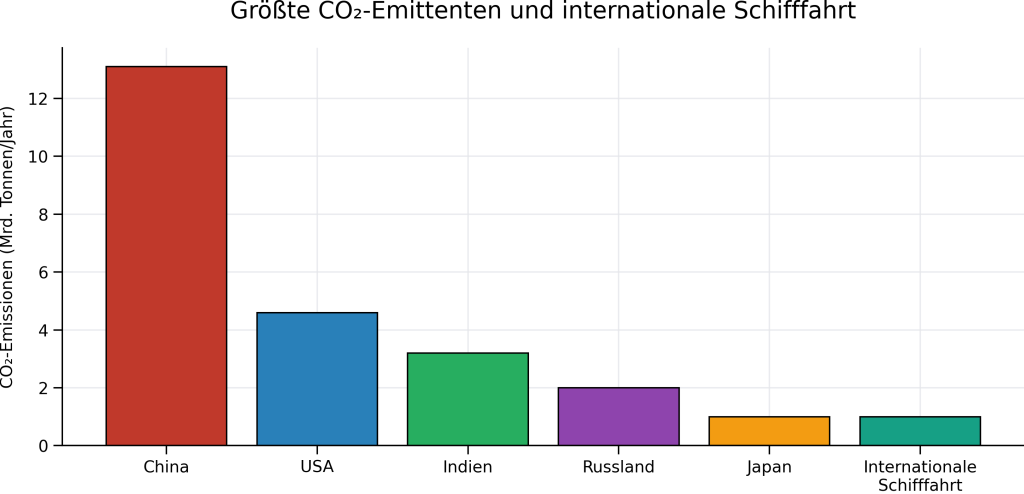
“I‘m surprised by two facts about shipping: On the one hand, about 90% of goods are transported by ship; on the other hand, if shipping were considered a country in its own right, it would be the sixth-largest emitter of CO₂ in the world.”

Chart: Emissions from Shipping

Figure: International shipping emits approximately one billion metric tons of CO₂ annually; if it were a sovereign state, it would rank among the world’s largest emitters. The figures are rounded and are provided for illustrative purposes only.

How did you go about your research?

“Iused a total of 32 sources, and only two of them are books. I used academic articles on the internet as my main source because I was able to find relevant academic articles very easily using Google Scholar. At first, I also tried having ChatGPT find relevant articles. However, that didn’t work well because ChatGPT can’t find good sources. I also used a lot of statistics and charts to make my work more convincing and credible.”

What was the biggest challenge you faced in your work—and how did you overcome it?

“Above all,Ifound it difficult to establish a clear structure for my paper. At first, I just wrote down everything I found online that might be relevant to my paper, without any clear structure or central theme. That’s why I found my paper very illogical when I read through it for the first time. Luckily, I still had plenty of time back then and was able to improve it. First, I organized all the information into a mind map and analyzed the relationships between the different pieces of information. Then I presented the information in a structured way in my paper. That actually worked very well.”

What skills or experiences have you personally gained from the W seminar?

Personally, I thinktime managementand proper citation are very important. If I had started my work very late, I wouldn’t have had time to read through it again and make corrections. That’s why I’m still very grateful that I started early. I also learned how to cite sources properly. That’s, of course, very important for my studies.”

What advice can you give to the next generation of W-Seminar students?

“1. Start early. It’s always a good idea to start writing early. You’ll have much more time and much less stress. In the end, you’ll still have the chance to improve your work.”

2. Work in an organized manner. I always saved the sources to my USB drive right after I used them, and then added them to the bibliography.”

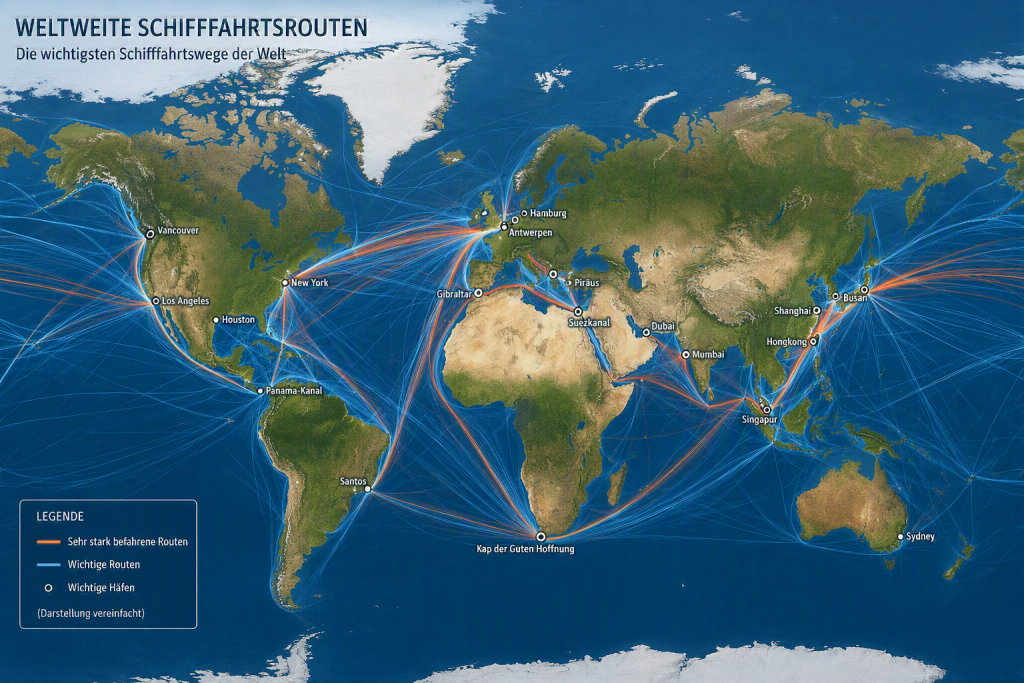
Marine Chart

“Through Jien’s seminar paper—which is backed by extensive literature research—the background of global shipping, its economic significance, emissions, and the biological impacts of shipping are clearly brought to light. A look into the future—particularly the discussion of replacing conventional fuels with alternative fuels and whether this could make climate-neutral shipping possible—rounds out this excellent seminar paper.”

Daniel Glotz | Geography Teacher & Seminar Leader

What’s your personal take on it? Overall, what did you take away from the W-seminar? Would you choose the same topic again?

“Yes, I find the W-Seminar very interesting overall. It gives you the opportunity to write an academic paper, which is also very helpful for college. It’s excellent preparation for college, although it can also be very stressful if, for example, you don’t manage your time well. I would definitely choose my topic again because there’s still a lot I don’t know and I’d like to learn more about it.”

If you had to describe your W-seminar in three words?
“Interesting– Helpful –Challenging”

Note: The interview was conducted in March 2026.

Modern education and upbringing:

f6de3f44 497e 491f bec0 e732ab2635af

P-Seminar: Write and Roll to Dublin

In the P-seminar “Write and Roll to Dublin”, Year 11 pupils took an in-depth look at Irish literature, culture and professions related to writing and travel. The project concluded with a joint trip to Dublin with presentations at selected locations in the city.

Ziegler koch haeder

Our rehearsal week

For many children – and also for their parents – the transition from Year 4 to grammar school is an important step. Mrs. Koch, principal, explains how the trial lessons work.

whatsapp image 2026 03 20 at 15.57.412

Modern education: The W-Seminar History

Anna Kranzbühler García’s seminar paper is dedicated to a chapter of regional Nazi history that has received little attention to date and impressively demonstrates the contribution that school-based research can make to the culture of remembrance.

study time cowshed room 1.jpgowithout headphones

The change of school

The change from Year 4 to Year 5 is a big step – for children and parents alike. At Schule Schloss Stein, we accompany this transition with experience, clarity and a lot of personal attention.