board altsteiner association 1965 ret

Stein in history: The founding of the Altsteiner Association in 1965

August | Angelika Ziegler & Ida-Lena Zoglmann

When Ilse Wiskott founded the Landschulheim Stein in October 1948, it was not only a school that came into being, but a community whose bond was to extend far beyond the years spent at school together. From the very beginning, the founder was accompanied by the wish to preserve this special bond between former pupils and their former school.

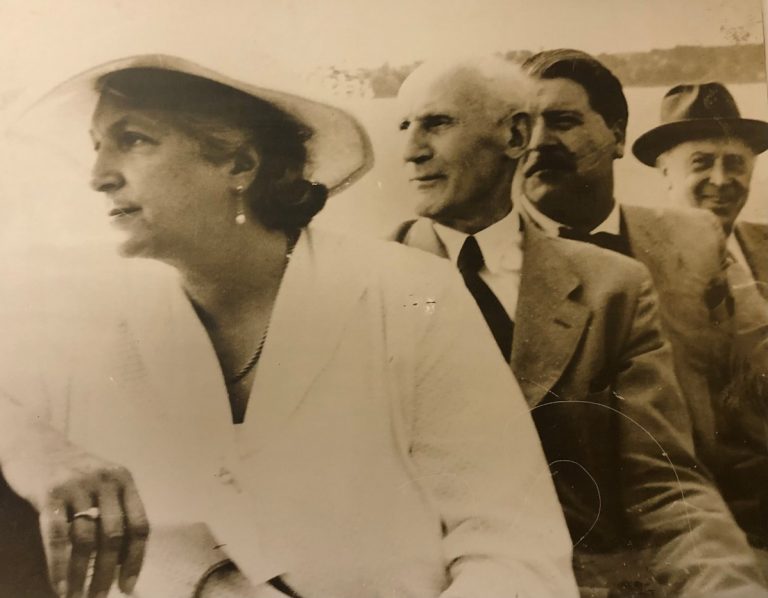
At Whitsun 1965, the second Altsteiner reunion took place in Stein. Around 110 former pupils accepted the invitation from Mr and Mrs Ziegler and gathered to set in motion the founding of an Altsteiner Association, long desired by Dr Wiskott.

Even though the founder of the Landschulheim could no longer experience this special moment—she had passed away in 1964—her wish was carried forward by the former pupils. On June 5, 1965, the Altsteiner Association was finally brought into being.

The founding of the association was far more than the creation of an alumni network. It was intended to maintain contact among former pupils and at the same time strengthen the bond with the school. In his address, Dr. Guidotto Graf Henckel Fürst von Donnersmarck, one of the initiators of the association, described the idea behind it: the shared years in Stein had shaped many—regardless of how long someone had attended the Landschulheim, or how much they had enjoyed it. These experiences were not to be simply forgotten, but to remain part of one’s own life story.

At the time, the head of the boarding school and chairman of the school, Olaf Ziegler, also addressed the Altsteinerinnen and Altsteiner. He saw in them an important link between past and future: they preserved the memory of the founding and development of the Landschulheim and could, through their own life stories, show what traces the “Steiner spirit” had left behind.

Over the following decades, the Altsteiner Association continued to develop. In 1982 it became the Altsteiner Verein, which has supported Landschulheim Schloss Stein, the educational work, and the Stein Scholarship Foundation ever since.

But the origins of this story lie in 1965. We would like to bring this special moment to life once more and take you on a short journey back in time. From the 1965 annual report, we have digitised the reports and speeches from that time and are making them available in the original—with the words of the people who experienced and shaped the founding of the Altsteiner Association themselves.

“The founding of the Altsteiner Association – the voices of 1965”

ON THE FOUNDING OF AN ALTSTEINER ASSOCIATION (ASV)

Summary of the introductory words by GUIDOTTO HENCKEL DONNERSMARCK on the occasion of the founding of an Altsteiner Association on 5 JUNE 1965 in Stein

We have come together to discuss the founding of an Altsteiner Association.

I do not feel like a president by my own grace, but merely wish to fulfil what I promised Dr Wiskott three years ago, namely to work towards such an association. At the time, I agreed with Wilhelm Solms, Albrecht Olenhusen, and Jokey Bethge to prepare this matter.

The first question we ask ourselves today is: Does the founding of such an association make sense? Two aspects seem decisive: first, enabling contact between former pupils and Stein; second, enabling contact among former pupils themselves. Does this make sense?

Your presence, and the equally numerous positive letters from those prevented from attending today, prove the interest. Contact between former pupils and Stein must be viewed both from Stein’s side and from ours. For example, it can be helpful for pupils in the upper school to receive advice and information from an “alumnus” who is studying or at the beginning of a career about what awaits them after the Abitur. Lectures or travel reports that one of us gives here, and participation in the home’s own events, can help broaden the pupils’ horizons. As is well known, the teacher problem and the desire for pupils who are not distinguished merely by the fact that no public school will accept them are acute issues for every boarding school. Here, an Altsteiner may have an opportunity to help. There are, of course, many other reasons from Stein’s perspective for maintaining contact with former pupils. But for those who feel no obligation whatsoever towards their former school, in terms of a continued connection with Stein, one thing above all seems essential to me:

All of us spent decisive years of our lives here. Since what is decisive lies less in the fact of Stein itself than in the fact that at this age one is most open to experiences and impressions, and the experiences of these years remain formative for life, it does not matter whether someone was here for a short or a long time, gladly or reluctantly. Therefore, I believe one should not hang this time in the wardrobe like an old suit; rather, it can be beneficial to put it on from time to time and realise that it no longer fits properly. That may be because it was poorly tailored at the time. But it may also be that my figure has deteriorated. In any case, it will prompt one to see everyday life and certain problems once again in a different light and to give them a different weight.

What has just been said applies similarly to contact among former pupils themselves. Many will be interested in what has become of old friends and enemies. A friendship is to be renewed, a feud finally settled. An address directory and brief annual updates about personal matters could create the necessary basis.

For the briefly indicated reasons, and certainly others as well, it seems sensible to me to find something that enables former pupils to maintain contact with one another and with Stein, if they wish. Added to this is that it was a particular wish of Dr Wiskott, on whose realisation she hoped until the very end.

The realisation of any idea requires organisation. Since we are all Steiner, the minimum appears as the maximum. It is about the possibility of contact. Contact can only be maintained with the Steiner who is approachable, and only those who can be reached are approachable. But with a number such as that which the Altsteiner already represent today, reachability can only be made possible through a consolidation. In doing so, I do not consider a registered association necessary, but rather a loose connection, a mere association, sufficient—whose continuity is to be ensured by statutes in which the prerequisites, goals, and means to be used are set out.

Wilhelm Solms, Albrecht Olenhusen, Jokey Bethge and I have drawn up statutes, in the drafting of which many other Altsteiner were involved directly or indirectly, as I have spoken with many about them. I therefore hope that, in principle, they correspond to the general expectations, even if they are designed to invite criticism and improvement.

The idea of founding an Altsteiner Association is old and did not originate with us. To the best of my knowledge, it was the generation of Christian Pfuel, the Seefried brothers, Werner Riepl, and Chris Bremme who first spoke with Dr Wiskott about it. The last reunion we had arranged with Dr for the past year did not take place. It was Dr’s year of death. Mr Ziegler is very open to an Altsteiner Association. His ideas largely coincide with those of Dr. Beyond that, I believe we may expect a good deal of inspiration from him.

Original text, source: Annual report 1965

altsteiner reunion 1965 ret

WELCOME ADDRESS by the head of the home and school sponsor, Mr Olaf ZIEGLER, at the ALTSTEINER reunion, Whitsun 1965

Dear Altsteiner!

For the second time you are gathering here today in Stein, the place where you spent part of your youth. But for the first time your reunion with Stein is taking place without my mother being able to welcome you here. Through her death, you have now unexpectedly become the “Steiner generation” that was still able to spend its school years under the founder of the Landerziehungsheim.

This also gives you, as I see it, a very important status in relation to today’s Steiner: on the one hand, you preserve the memory of a past in which this home was built up and its character shaped. On the other hand, you belong to those who have reached a stage of life that for today’s Steiner will only begin in the future. You therefore draw from the past and stand in the future. I see in this your importance and your task for the Landerziehungsheim, for you alone can today give a binding account of whether the imprint that the “Steiner spirit” left on you and within you proves to be good currency in your life. You alone—and no educator—can today assess which manifestations of the “Steiner spirit” have been able to prove fruitful in reality.

I believe that it is not necessary to agree on a single reality and fruitfulness, for the manifestations of the “Steiner spirit” will have been as varied as everyone in this room is different.

From the statutes of the “Altsteiner Association” I have seen to what extent you consider it right to give the children entrusted to me here a maximum of freedom—certainly in the hope, if not indeed the belief, that the “genius loci” of Stein will prevent any misuse of that freedom.

But here we have come up against a decisive question, namely what can and should happen so that the oft-cited “Steiner spirit” does not merely haunt today and tomorrow as a kind of friendly vision from the youth of former pupils.

It is certainly asking a great deal of a spirit to embody itself; but without this transformation it would lead only an all-too-ephemeral existence. So let us try to make this transformation possible in each individual who spends their school years here.

I thank you for coming together here this morning to offer the “Steiner spirit”, from your side, a form of appearance worthy of it.

Original text, source: Annual report 1965
zsigmondy steger ret

SECOND ALTSTEINER REUNION

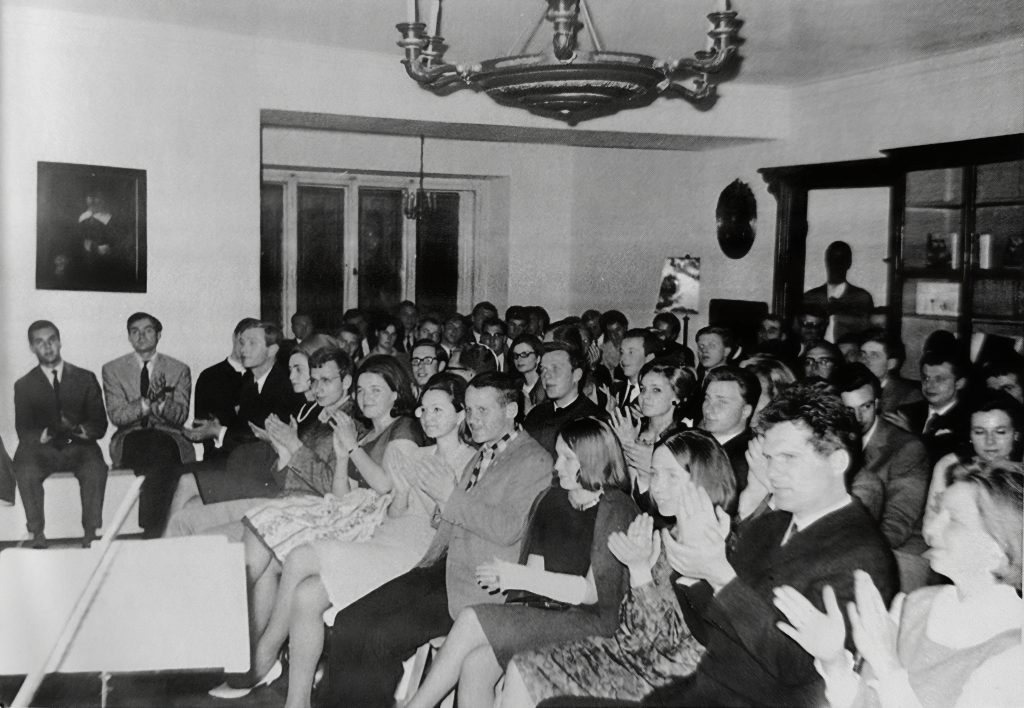
Following the death of our esteemed Dr Wiskott, it was only after two and a half years, at Whitsun 1965, that we came together for our second Altsteiner reunion. There were around 110 old Steiner who followed the invitation from Mr and Mrs Ziegler and gathered after lunch in the gymnasium to bring into being the “association” also desired by Dr. After the introductory words by Guidotto Henckel Donnersmarck, also printed here, Wilhelm Solms read out the proposed statutes, which were then discussed in a lively and pleasingly factual manner. The discussion developed above all around the core of the proposal:

“The association wants the LEH to be preserved in its original form. In doing so, it affirms:

  1. a) the humanistic grammar school
    b) priority of residential education over school education
    c) co-education
    d) religious education
    e) pupils’ initiative
    f) music, sport, theatre and literature as foundations of education

It rejects:

  1. a) an organised pupil co-administration
    b) influence of name, money, race, political conviction in home and school.”

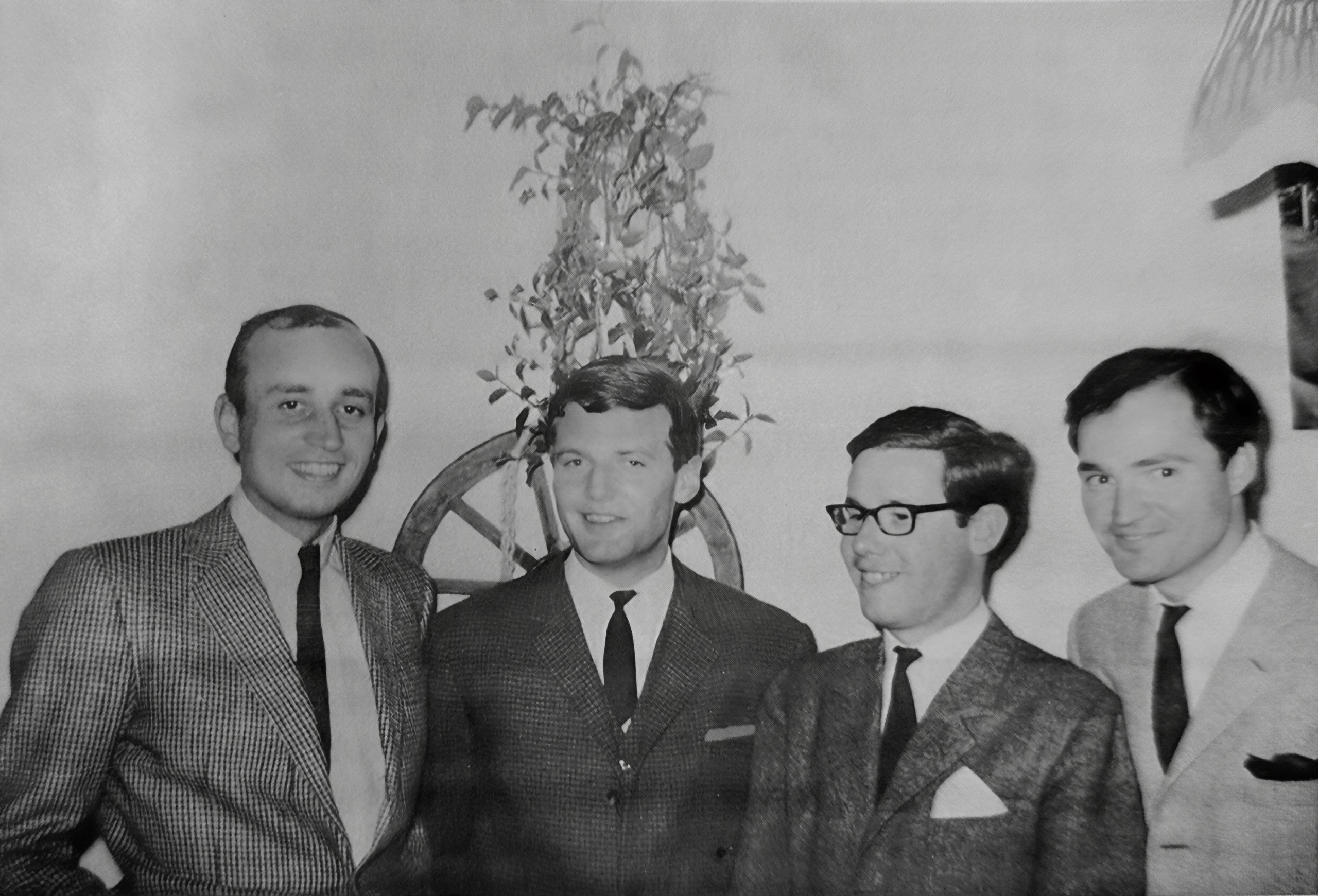
It was interesting to see that some of the youngest Altsteiner no longer knew that the school was originally, and for a long time, purely humanistic, and that they are no longer as opposed to an organised pupil co-administration, which in the opinion of the older Altsteiner works against pupils’ initiative. But the great majority agreed. However, since some points regarding membership, convening the assembly, etc. were amended, the statutes will be submitted again at the next reunion at Whitsun 1966. Wolfgang Hoesch, Karlheinz Kaeppel and Kilian v. d. Tann formed the election committee, which first collected the nominations and then the ballots of the secret vote. While the ballots were being counted, Mr Ziegler, as the new head of the home, welcomed the association. His address is also printed here.

By a large majority of votes, the following were elected to the board of the Altsteiner Association:

  1. Chairman: Guidotto Henckel Donnersmarck
  2. Chairman: Wilhelm Solms-Lich
    Secretary: Joachim Bethge
    Treasurer: Werner Riepl.

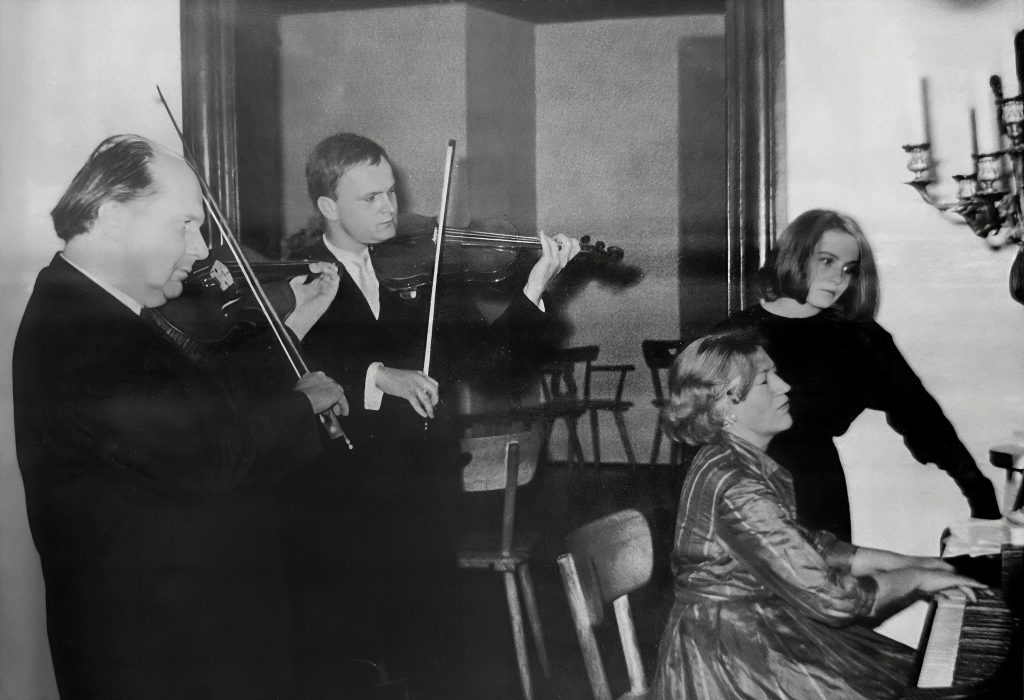
After “tea in the castle”, Mr and Mrs Zsigmondy and the Altsteiner Helmut Steger gave a concert in which they performed violin double works by Handel, Bartòk and Bach. We delighted in the astonishing progress of Helmut Steger, who was entirely equal to his famous partner in tone.

Candlelight and an excellent buffet set the scene for the dance evening in the castle, which quickly got into the mood thanks to the good band. Once again, one could see that the old familiar Steiner beer forges bonds not only when it is forbidden. Many of the popular Steiner had come, such as Veit Gärtner, Mr Rupp, Otto v. Westerholt, Hans Spiegel (Fösch), and Wolfgang Hoesch confirmed his engagement to Alexandra v. Pfuel, to which we extend our particularly warm congratulations here on behalf of the Altsteiner. The presence of Countess, Mrs Weymar, Mr Konrad—by now, rightly, a proud family man—Mr Derlick and Dr Rasch brought the old days tangibly close again.

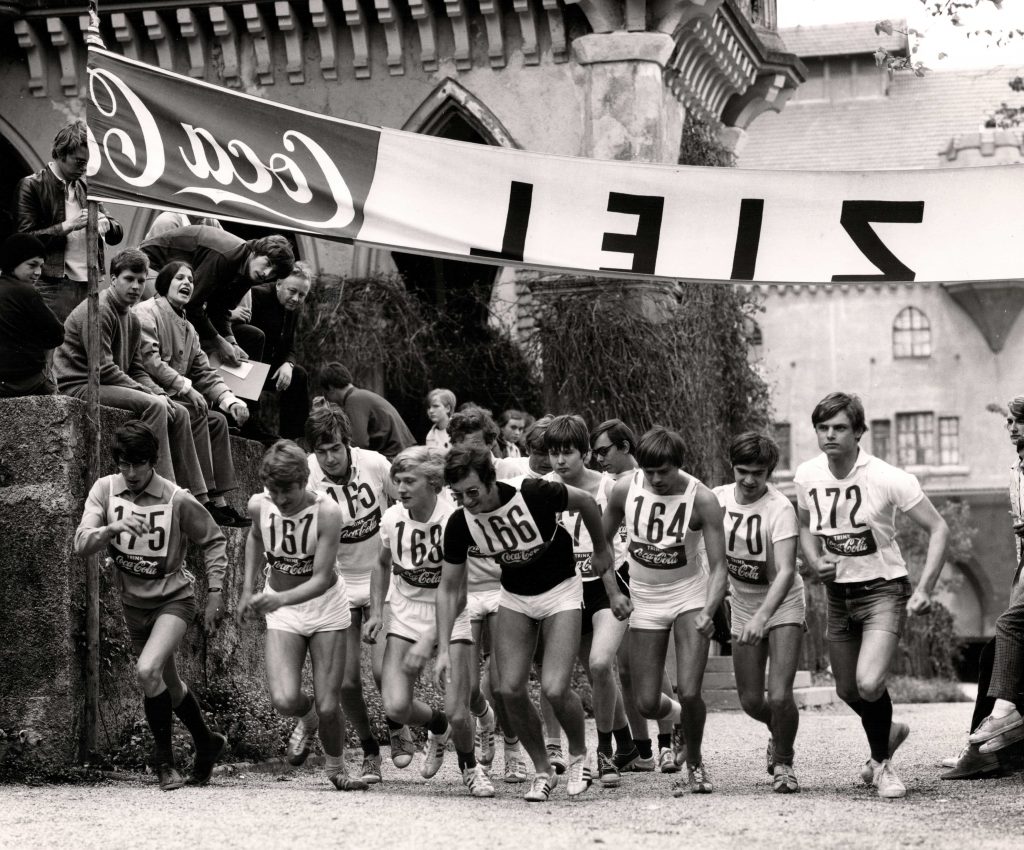
After a short sleep in the home, we met on the sports field, and we were able to strengthen the team of today’s Steiner from our ranks so well that they actually won at handball.

After lunch, the crowning finale was a castle tour by Mrs Schuhbeck herself (her husband sadly passed away last year). Very old Steiner discovered a new punchline in her talk for the first time: “Here he (Heinz v. Stein) finished her off. You can’t see the blood any more because it was so long ago.” So long ago that the Steiner no longer have a spare key to the loggia rock door? The board of the association hereby submits the motion that the spot continue to be renewed twice a year.

After the official departure, the focus shifted to Martini, from where the last of the old Steiner set off towards evening.

We all hope to see again at the reunion in a year—at WHITSUN 1966—also the former friends who were unable to come this time, and we thank Mr and Mrs Ziegler for their warm hospitality.

Jokey and Wilhelm

Original text, source: Annual report 1965