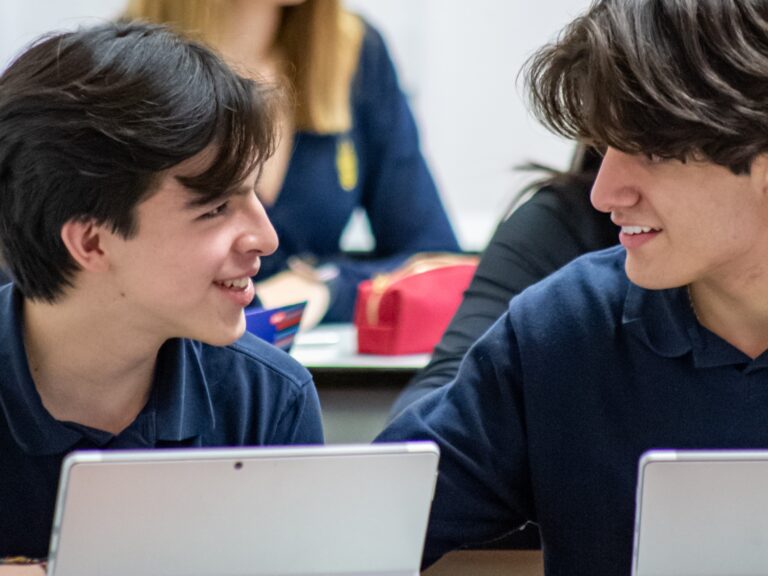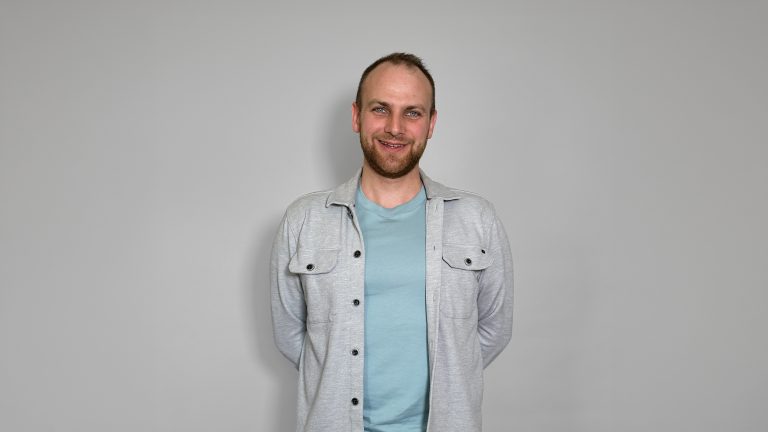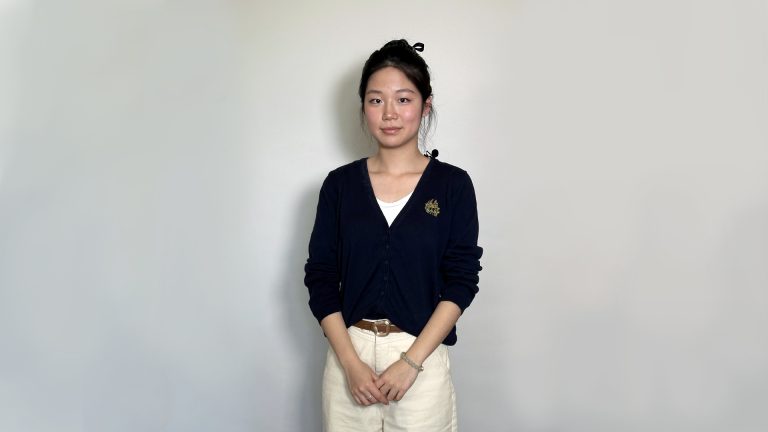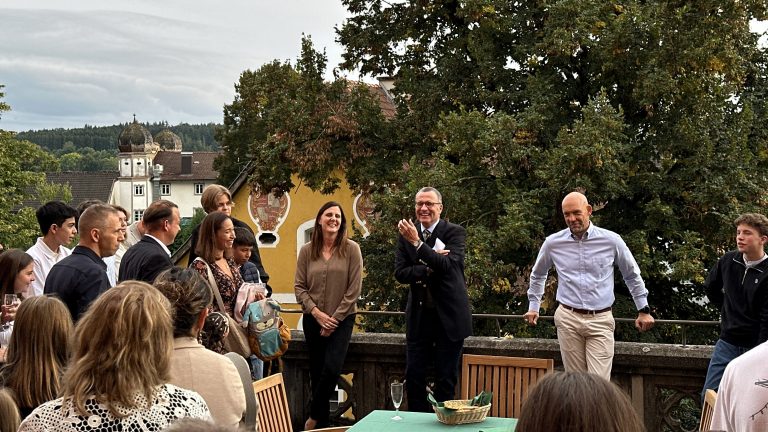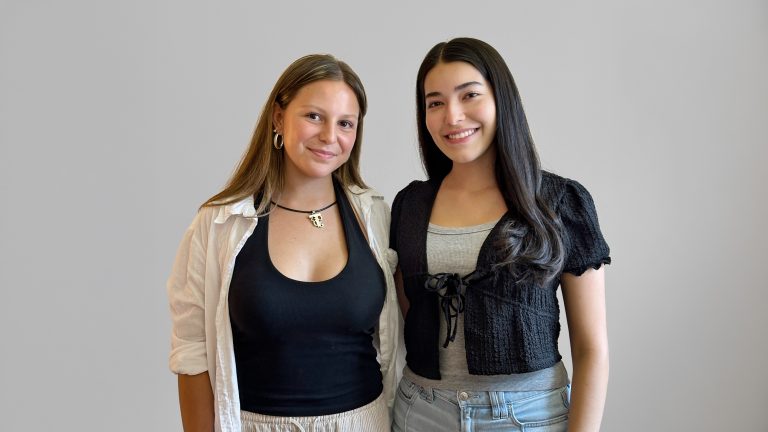
Anke Stütz and pupils working on the seminar paper.

THE W-SEMINAR:
Learning to work academically

July | 2025

As part of the upper school, all pupils complete what is known as a W-Seminar. The aim is to practise academic work: How do you choose a topic? How do you formulate a research question? And how do you structure a written paper sensibly? How do I use Word to create my bibliography and table of contents?

In doing so, pupils receive methodological guidance and support, but in the final half-year they write the paper largely independently. The process is accompanied by regular check-in appointments with the respective subject teacher. At the end, both the written seminar paper and a discussion about the paper are assessed.

The pupils in the current Year 12 have opted for W-Seminars in Geography, History and Art. Here, the small group sizes at Stein are a particular advantage, as this allows us to delve truly deeply into the topics and to take up and develop any individual interests of the pupils in detail.

Geography: The World’s Oceans – Basis of Life and Stage for Global Crises

The oceans are central habitats and at the same time highly sensitive ecosystems. The seminar addresses their role as a source of food, transport route, climate regulator and energy source—and the ecological, economic and political conflicts that arise from this. Pupils engage with questions around environmental pollution, fishing, shipping and sustainable use—and thus gain a holistic view of one of the most important habitats on our planet.

The W-Seminar in Geography is accompanied by upper-school coordinator Daniel Glotz.

“The world’s oceans are like a mirror that shows us the beauty and vulnerability of our planet.”

Map showing global ocean currents and sea-surface temperatures (based on NASA/SVS). Red indicates warm water, blue cold water.

Map showing global ocean currents and sea-surface temperatures
(based on NASA/SVS). Red indicates warm water, blue cold water.

History: How do we remember, and why? – Culture of remembrance of the Nazi era in Bavaria

How can the crimes of National Socialism be remembered today? This W-Seminar, led by teacher Korbinian Kollmeier, is devoted to the culture of remembrance in Bavaria, or directly on our doorstep in the Chiemgau region, and engages with local places of remembrance, new digital formats and current social developments. Pupils develop their own concepts of remembrance—and critically examine the significance of historical responsibility in our democracy. You can discover a detailed insight into a pupil’s W-Seminar work here: W-Seminar History.

“In particular, the fates of victims of the Nazi dictatorship in our Chiemgau region—often still only little researched or not researched at all—offer pupils a very direct, personal approach to the topic. This local and personal connection is very important to me; it creates closeness and identification, an awareness of the fact that the crimes happened ‘here’ as well, and that behind the prisoner number there is certainly a personal fate. For me, the creativity in developing new forms of remembrance, the feel for historical contexts, and the almost detective-like character that participants develop in their research in databases and archives are among the skills acquired—skills that will also be of use to pupils on their path after the Abitur.”

Korbinian Kollmeier | History teacher

Study trip of the W-Seminar “History” to Poland.
Click here to access the report.

Art: Land Art and Street Art –

Art in public space

Starting from the art forms of Land Art and Street Art, this seminar led by teacher Anke Stütz explores the impact of art outside classical exhibition spaces. Pupils examine artistic strategies in the field of tension between nature, the public sphere and political expression—and put their own projects into practice. Theory and practice go hand in hand here.

“On the one hand, within the framework of the W-Seminar we were able to engage very deeply and thoroughly with various well-known land art artists, each of whom, in very different ways, subtly or even forcefully altered the natural environment through artistic intervention and thus created unique works of art. The W-Seminar pupils also each realised their own Land Art artwork, which they documented in photographs and film. On the other hand, we engaged with the topic of Street Art, which appeals particularly strongly to the younger generation through its mixture of political revolt and creativity. In this artistic direction too, the W-Seminar participants created their own artwork in order to approach their respective specialist paper topic creatively.”

Anke Stütz | Art teacher

Valentina with blossoms by the river

Valentina Reichelt working on her W-Seminar project

In future blog articles, we would like to look even more concretely at the individual W-Seminars and provide an insight into the exciting topics our pupils are currently working on. What questions have they developed? What particular insights have emerged over the course of the work? And how do they experience the process of academic work on a very personal level? We look forward to presenting their projects in more detail in the coming school year.

Mr Meckl, Katia, Isabel & Tasha

The Clubs

Clubs are definitely part of the life at Stein. In this article you will learn what makes our extracurricular activities so special and just how wide the range of options is.