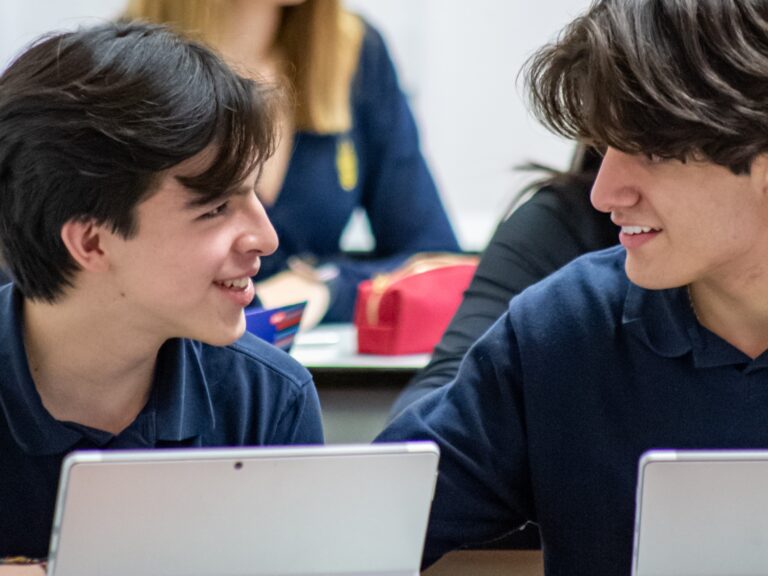
Modern Education: Learning to Work Scientifically
Finding a topic, developing one’s own research questions, researching, analyzing, and preparing the results in a scholarly manner. We present the current W-Seminars.

A commentary by Headmistress Theresia Schilling
Growing together – learning together! This is no empty phrase at Stein! Daily we teach our young people, but we also learn from them.
We offer 2 different branches: the economic and the modern languages branch.
It is rather uncommon for students to spend their entire school career with us. This presents teachers with great challenges daily. One always starts anew.
Hence the question: what should the faculty at Stein be like?
As Headmistress and former boarding school educator, I cannot work with people who merely “do their duty” at our school. These individuals are completely out of place at Stein!
Our faculty (approx. 25 permanent teachers of all ages) differs significantly from a faculty at a public school.
I expect commitment outside of lessons, empathy in all cases, understanding for the small and large problems, as well as the concerns of the children and young people. One should always have an open ear and time for the students. My door is always open, especially for the young people.
Ideal colleagues are those who also enjoy working in the boarding school, be it as a substitute for the supervisors, as invigilators for study time, or as leaders of interest groups.
Back to school: lessons at Stein, especially in the lower school (here the classes are truly very small), are different! Quote Mr. Ziegler: “It’s like teaching at the kitchen table.” This truly captures it.
The small learning groups can be supervised with particular care, intensity, but also with the necessary strictness.
Anyone who participates in our famously – infamously known scavenger hunt (a particular hobbyhorse of Sebastian Ziegler and me! We haven’t missed one in the last 30 years!) at the beginning of the school year belongs!
This applies to children, to young people, but equally to adults.
Many other occasions allow teachers to see and experience the children and young people in a completely different light than just in lessons.
I myself would not want to miss such opportunities under any circumstances. Fortunately, many of my colleagues share this view.
This creates a very special relationship with the children and young people entrusted to us.
It creates a wonderful kind of trust and familiarity. Often, valuable friendships also emerge from this after the Abitur.


Finding a topic, developing one’s own research questions, researching, analyzing, and preparing the results in a scholarly manner. We present the current W-Seminars.

The seminar paper by Jien He, now a high school graduate, focuses on the world’s oceans as the foundation of life and the setting for global crises. Using international shipping as an example, the paper illustrates the central role the oceans play in the economy, the environment, and the sustainable development of our future.
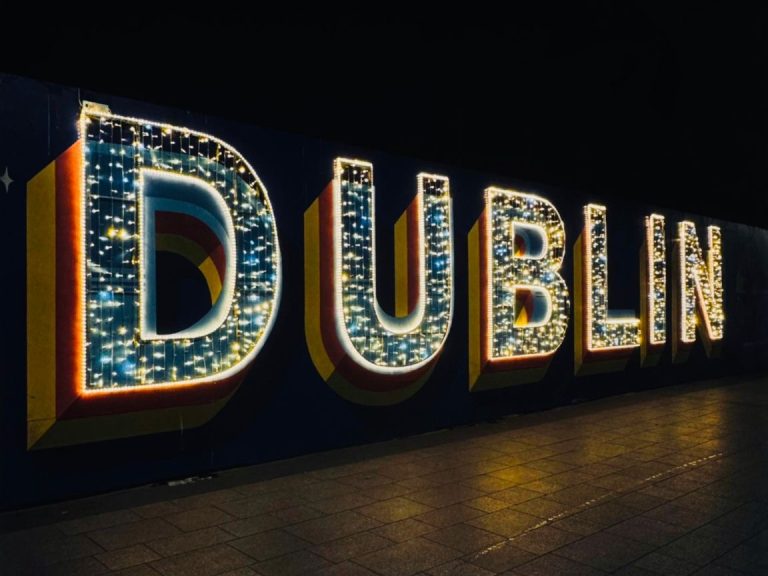
In the P-seminar “Write and Roll to Dublin”, Year 11 pupils took an in-depth look at Irish literature, culture and professions related to writing and travel. The project concluded with a joint trip to Dublin with presentations at selected locations in the city.
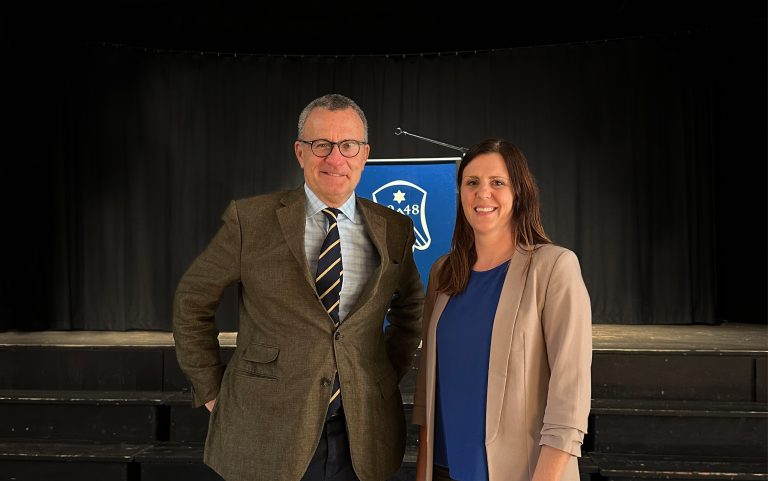
For many children – and also for their parents – the transition from Year 4 to grammar school is an important step. Mrs. Koch, principal, explains how the trial lessons work.